
Microwave Fridge Combo Units: Are They Worth It for College Students, or Is There a Smarter Option?
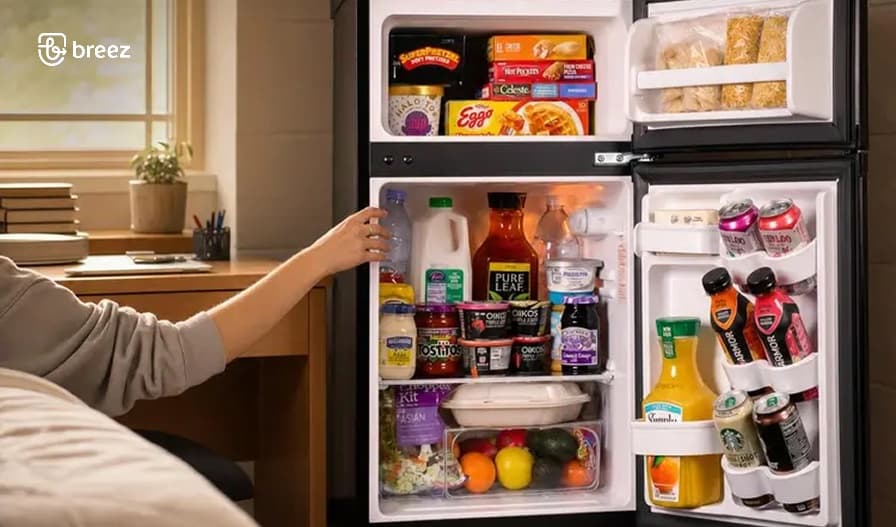
If you have started shopping for dorm appliances, you have probably experienced the same moment of sticker shock.
You search for a mini-fridge.
You find one for $150.
Then suddenly you see a microwave fridge combo unit priced at $400 to $500.
And your first thought is:
“How is this thing triple the price?”
Fair question.
At first glance, a microwave fridge combo can look like an overpriced dorm luxury.
But once you understand how college housing actually works, the higher price starts to make a lot more sense.
Because these units are not just about cold drinks and frozen pizza.
They are built to solve one of the biggest hidden problems in student housing:
Electrical limitations.
For many students, the microwave fridge combo is not a luxury upgrade. It is the difference between a smooth dorm setup and spending the year fighting blown breakers, housing violations, and awkward late-night trips to the communal kitchen.
So are they worth it?
Let’s break it down.
What Are You Actually Paying For?
Most students assume combo units are simply a microwave stacked on top of a mini-fridge.
That is not what a true combo system is.
A real microwave fridge combo is engineered specifically for student housing environments where:
- Outlets are limited
- Electrical systems are older
- Fire codes are strict
- Space is extremely tight
The biggest difference comes down to power management.
The “Smart Circuit” Advantage
Most dorms only allow one major appliance per outlet.
That creates a problem because refrigerators and microwaves both draw significant power.
Combo units solve this with integrated power management technology.
Here’s how it works:
When the microwave turns on, the refrigerator temporarily pauses its compressor for a few seconds.
Students never notice it happening.
But internally, the system is balancing electrical demand to avoid overloading the circuit.
That is why many universities specifically approve combo units while prohibiting separate fridge and microwave setups.
The appliance is essentially functioning like an electrical safety system.
Why Universities Care So Much About Combo Units
Dorms were not built for modern electronics.
Today’s students arrive with:
- Gaming consoles
- Laptops
- TVs
- Chargers
- Hair tools
- Coffee makers
- Appliances
All competing for limited electrical infrastructure.
According to the National Fire Protection Association (NFPA), overloaded outlets and improper extension cord usage remain major causes of residential electrical fires.
That is why housing departments often prohibit:
- Daisy-chained power strips
- Multiple heavy appliances on one outlet
- Non-approved microwaves
A combo unit reduces those risks dramatically because everything is designed to operate through one protected power source.
The Hidden Cost of Separate Appliances
Buying separate appliances feels cheaper upfront.
But students often underestimate the hidden downsides.
The Outlet Problem
Most dorm rooms do not have enough conveniently placed outlets for multiple large appliances.
Students end up using:
- Extension cords
- Cheap adapters
- Overloaded power strips
Which creates both safety and compliance problems.
Many Resident Assistants specifically check for this during inspections.
The Move-Out Nightmare
Separate appliances also create double the logistical headache at the end of the year.
Instead of moving one appliance, students now have:
- A microwave
- A refrigerator
- Extra cords
- Additional packaging
And if they decide to sell everything?
They now need multiple buyers, multiple listings, and multiple pickups during finals week.
That quickly becomes exhausting.
Is Renting the Smarter Option?
For many students, yes.
Especially if they only plan to live in campus housing temporarily.
The Rental Math Makes More Sense Than Most Students Expect
A quality combo unit can easily cost:
- $400 to $500 upfront
- Plus transportation
- Plus storage
- Plus repairs
- Plus resale headaches
Meanwhile, many rental programs offer dorm-approved units for around the cost of a few meals each month.
With Breez, students receive:
- Delivery before move-in
- Approved dorm-safe appliances
- Maintenance support
- Move-out pickup
- Simplified logistics
That means students avoid hauling heavy appliances through crowded residence halls or figuring out where to store them during summer break.
For students prioritizing convenience, renting often becomes the smarter overall value.
Can You Build Your Own Alternative?
Technically, yes.
Some students choose:
- A high-end mini-fridge
- A low-wattage microwave
- Separate setups
But there is a catch:
Your school has to allow it.
Many universities cap microwave wattage around:
- 700 to 800 watts
And some prohibit multiple high-draw appliances entirely.
Students should always verify housing rules before attempting a DIY appliance setup.
The “True Zero” Freezer Debate
Not all combo units have the same freezer quality.
Many cheaper mini-fridges only include tiny “ice box” compartments that:
- Struggle to freeze properly
- Melt ice cream
- Create uneven cooling
Some students prefer standalone mini-fridges with separate freezer doors because they maintain true freezing temperatures more consistently.
If frozen meals are a major part of your routine, this detail matters more than most students realize.
The Tech Specs That Matter Most
Before committing to any microwave fridge combo, students should focus on the specifications that directly impact dorm compatibility.
Amperage Draw
Many dorms limit appliance loads to:
- 10 amps
- 15 amps
Combo units are designed specifically around these limitations.
Random retail appliance pairings may not be.
USB Charging Ports
Modern combo units increasingly include:
- USB charging ports
- Front-facing outlets
- Device charging stations
This becomes surprisingly valuable in dorm rooms where outlets are limited.
Defrost Technology
Manual defrosting sounds simple until students try doing it in a carpeted dorm room.
Poor defrosting practices often lead to:
- Water leaks
- Carpet damage
- Mold growth
- Housing charges
Students should prioritize units with:
- Easier defrost systems
- Better moisture management
- Reliable cooling performance
So… Is a Microwave Fridge Combo Actually Worth It?
The answer depends on your housing setup.
Buy It If:
- You live in a small dorm or micro-suite
- Your school has strict appliance rules
- Outlets are limited
- You want maximum convenience
- You plan to stay on campus multiple years
Skip It If:
- Your dorm provides communal appliances
- You have access to a full kitchen
- Your apartment already includes appliances
- Your housing rules allow separate low-wattage units
The Real ROI
If a student uses a combo unit throughout four years of college, the annual cost becomes surprisingly reasonable compared to the convenience it provides.
And for many students, avoiding move-in stress, electrical problems, and late-night kitchen trips becomes worth the investment alone.
Choose Based on Your Dorm Setup, Not Just the Price Tag
A microwave fridge combo is not simply another dorm appliance.
It is:
- A space-saving solution
- A power management system
- A dorm compliance tool
- A convenience upgrade
The smartest students choose based on their floor plan, outlet access, and university policies rather than simply buying the cheapest option online.
Before move-in season, check your housing guidelines carefully and secure an approved appliance setup before inventory becomes limited.
Explore Breez dorm-approved appliance options here:
Frequently Asked Questions
Can I put a regular microwave on top of a fridge?
Technically yes, but it is not always recommended. Poor airflow, vibration, and stability issues can create safety risks, especially in tight dorm spaces.
Do combo units use a lot of electricity?
Most dorm-approved units are designed to meet Energy Star efficiency standards while safely managing power draw for student housing.
Is the microwave powerful enough for frozen meals?
Most combo units use 700-watt microwaves, which are fully capable of heating common dorm meals, though they may cook slightly slower than larger residential microwaves.
What happens if one part breaks?
For purchased units, repairs may require servicing the integrated system. Rental programs like Breez often include maintenance support and replacement assistance throughout the school year.
Keep reading
View all articles →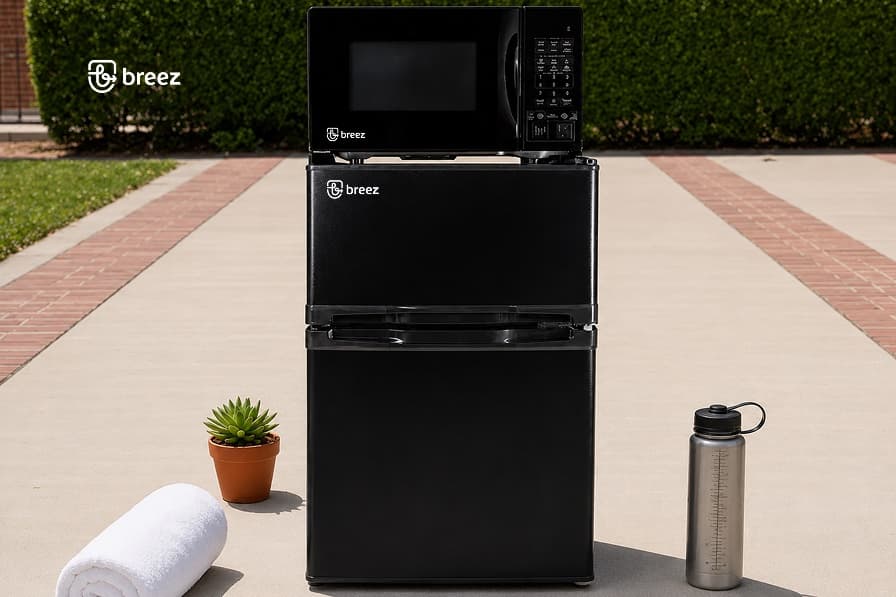
Fridge Microwave Combo for Your Dorm Room: Everything You Need to Know Before You Commit
Fridge Microwave Combo for Your Dorm Room: Everything You Need to Know Before You Commit Dorm rooms are basically a high-stakes game…
Read more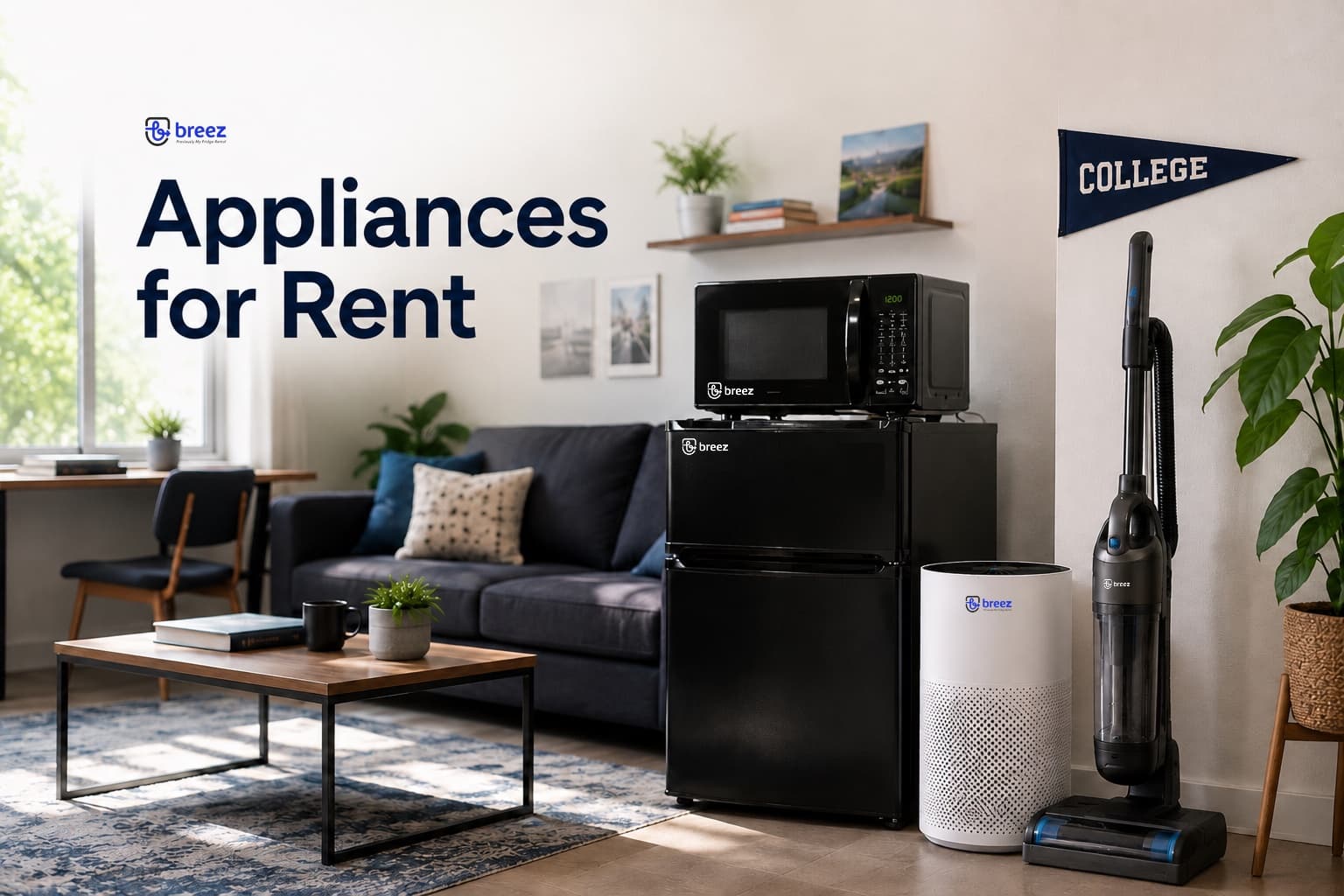
Appliances for Rental: Why More College Students Are Ditching the Buy-and-Haul Cycle
Every May, college towns across the country experience the same strange phenomenon. Sidewalks overflow with abandoned mini-fridges. Microwaves pile up next to…
Read more
College Apartment Essentials: The Smart Renter’s Checklist for Your First Place Off Campus
Moving off campus feels like freedom. More space. No resident assistants. No communal bathrooms. No dorm rules taped to the wall. But…
Read more